
Mastering Team Dynamics: A Practical Guide to Conflict Resolution Strategies
Table of Contents
- Introduction: Reframing Conflict as a Development Signal
- Five Response Patterns and How to Spot Them Quickly
- Active Listening Methods to Diffuse Heat
- The Micro-Mediation Sequence: A Stepwise Dialogue Model
- Ready Phrases to Lower Escalation and Restore Focus
- Short Role Play Routines Teams Can Rehearse
- Adjusting Tactics for Power Imbalances and Culture
- Simple Measures to Track Repair and Team Climate
- Anonymized Example: Small Repair, Big Impact
- Practical Toolkit: Templates, Checklists and Reflection Prompts
- Wrap Up: Daily Practices to Keep Skills Fresh
Introduction: Reframing Conflict as a Development Signal
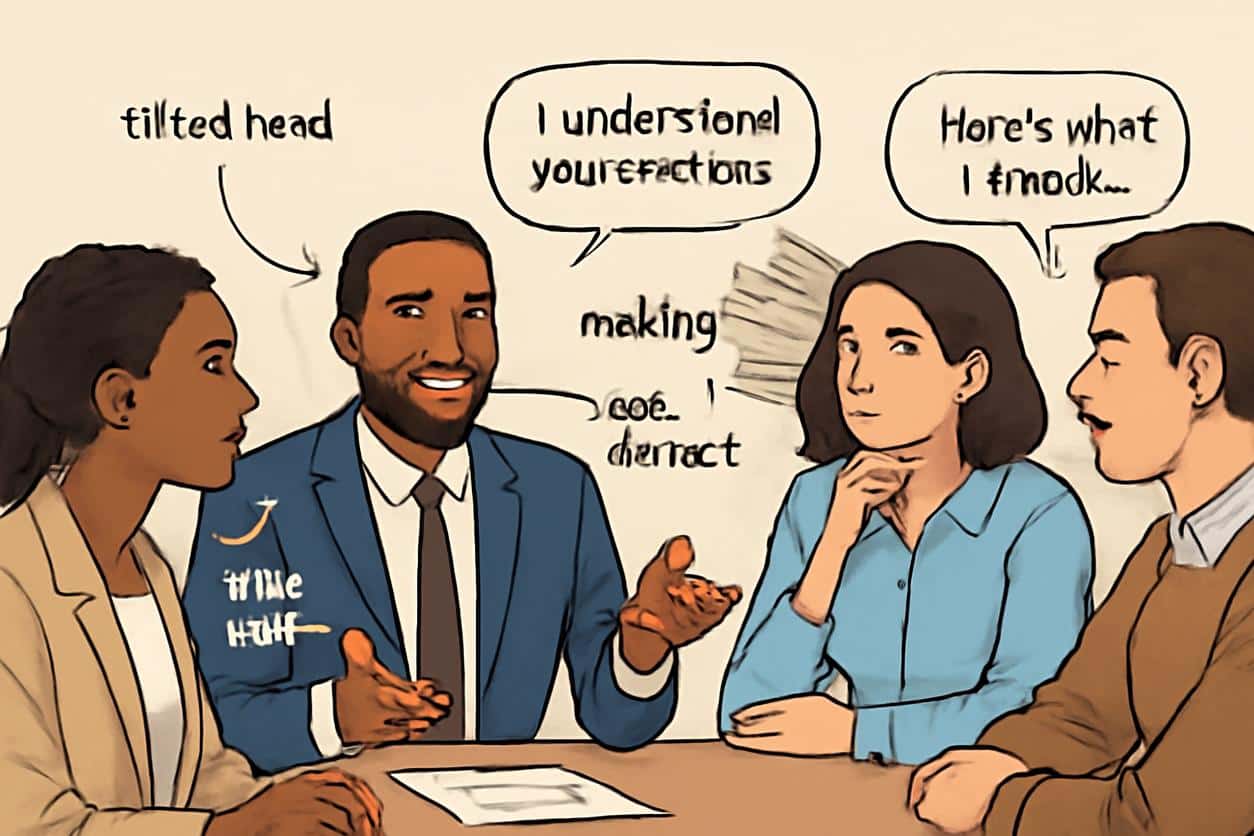
For many team leaders and managers, workplace conflict feels like a failure—a disruption to productivity and harmony. But what if we reframed it? Instead of a problem to be squashed, view every disagreement as a development signal. It’s an unfiltered, real-time indicator of misaligned expectations, unclear processes, or a simple need for better communication. Each instance is a chance to practice and model effective conflict resolution strategies, turning a moment of friction into a catalyst for team growth and resilience. This guide moves beyond theory, offering you micro-practices, dialogue scripts, and simple metrics to transform how you manage and resolve disputes. By treating conflict as a daily skill drill, you build a stronger, more psychologically safe team ready for the challenges of 2025 and beyond.
Five Response Patterns and How to Spot Them Quickly
Understanding how individuals instinctively react to conflict is the first step in guiding them toward a more constructive approach. Most reactions fall into one of five patterns, based on the Thomas-Kilmann Conflict Mode Instrument. Recognizing these in the moment allows you to tailor your conflict resolution strategies effectively. For a deeper dive into theoretical models, you can explore various Conflict Resolution Frameworks.
| Response Pattern | Core Motivation | How to Spot It (Verbal Cues) |
|---|---|---|
| Competing | I win, you lose. | “This is the only way it can be done.” “My plan is better.” |
| Accommodating | I lose, you win. | “Whatever you want is fine.” “It’s not a big deal, we’ll do it your way.” |
| Avoiding | I lose, you lose. | “I don’t want to talk about this now.” “Let’s just move on.” |
| Compromising | We both win some, we both lose some. | “Let’s just meet in the middle.” “How about we split the difference?” |
| Collaborating | We both win. | “How can we solve this together?” “Let’s explore all options to meet both our needs.” |
Active Listening Methods to Diffuse Heat
When emotions are high, logic takes a backseat. The fastest way to de-escalate a tense situation is to make the other person feel heard and understood. This is more than just staying quiet; it’s about active engagement. Effective listening is a cornerstone of emotional intelligence and a powerful tool in your conflict resolution toolkit.
Techniques for Effective Active Listening
- Paraphrasing for Clarity: Restate what you heard in your own words. This confirms your understanding and shows you are paying attention. Start with phrases like, “So, if I’m hearing you correctly…” or “It sounds like you’re saying…”
- Reflecting the Feeling: Acknowledge the emotion behind the words. This validates their experience without necessarily agreeing with their position. Use phrases like, “I can see why you would feel frustrated by that,” or “It sounds like this has been very stressful for you.”
- Asking Open-Ended Questions: Encourage them to share more detail. Avoid “yes” or “no” questions. Instead, ask “What happened next?” or “Can you tell me more about your concerns with that approach?”
The Micro-Mediation Sequence: A Stepwise Dialogue Model
When you need to step in and facilitate a resolution between team members, having a structured process prevents the conversation from spiraling. This four-step micro-mediation sequence provides a clear, repeatable framework. It is one of the most practical conflict resolution strategies a leader can deploy.
Step 1: Set the Stage (2 Minutes)
Begin by establishing a shared goal of finding a workable solution. Frame the conversation positively.
Dialogue: “Thanks both for talking this through. My goal here isn’t to decide who is right or wrong, but to help us find a path forward that works for everyone and for the project. Can we agree to that goal?”
Step 2: Uninterrupted Sharing (5 Minutes per Person)
Give each person a set amount of time to explain their perspective without interruption. Your role is to enforce this rule and listen intently.
Dialogue: “First, Sarah, I’d like you to share your perspective on the situation. John, your role is just to listen so you can fully understand. You’ll have your turn next.”
Step 3: Identify Core Needs (5 Minutes)
After both have shared, your job is to dig beneath the surface-level complaints to find the underlying needs or values at stake (e.g., a need for respect, security, or autonomy).
Dialogue: “Thank you. Sarah, it sounds like you need clear communication on deadlines to feel respected. John, it sounds like you need the flexibility to innovate without feeling micromanaged. Is that accurate?”
Step 4: Co-Create a Path Forward (10 Minutes)
Shift the focus from the past problem to future action. Brainstorm solutions that address the core needs you just identified. Guide them to a specific, agreed-upon action.
Dialogue: “Given these needs, what is one small change we can commit to for next week’s project? How can we ensure Sarah gets the clarity she needs while John has the autonomy he needs?”
Ready Phrases to Lower Escalation and Restore Focus
In the heat of the moment, the right words can make all the difference. Having a few go-to phrases ready can help you steer a conversation back to a productive track. Memorize a few of these to deploy as part of your immediate conflict resolution strategies.
- To shift from blame to curiosity: “Help me understand your perspective on this.”
- To validate without conceding: “I can appreciate why you see it that way.”
- To focus on the future: “What would a successful outcome look like from your point of view?”
- To create a shared problem: “This is a tough situation. How can we approach this together?”
- To pause a heated exchange: “Let’s take a brief pause and regroup in 10 minutes.”
Short Role Play Routines Teams Can Rehearse
Conflict resolution is a skill, and skills require practice. Dedicate 10 minutes in a weekly team meeting for quick, low-stakes role-playing. This normalizes the conversation around conflict and builds muscle memory for your team.
Example Routine for a Team Meeting
- Present a Mini-Scenario: “Scenario 1: Two colleagues disagree on the priority of two competing tasks. Both are urgent.”
- Pair Up: Have team members pair up to act it out for 3-4 minutes, with one person practicing a de-escalation phrase.
- Quick Debrief: Ask one or two pairs: “What worked? What felt awkward?”
This routine makes practicing conflict resolution strategies a normal part of team development, not just a reaction to a crisis.
Adjusting Tactics for Power Imbalances and Culture
Effective conflict resolution is not one-size-fits-all. The context of the relationship and cultural backgrounds of those involved heavily influence the best approach. A deep understanding of Emotional Intelligence Overview can significantly improve your ability to navigate these nuances.
Navigating Power Dynamics
When conflict occurs between a manager and a direct report, the perceived power imbalance can silence the employee. As the leader, you must actively create safety.
- Acknowledge the dynamic: “I know I’m your manager, but for this conversation, I want to hear your candid perspective. Your feedback is crucial.”
- Use a neutral third party: For serious issues, consider bringing in a facilitator from HR or another department to ensure fairness.
- Focus on process, not people: Frame the issue around a process that can be improved, rather than a personal failing.
Considering Cultural Differences
Communication styles vary widely across cultures. What is considered direct and honest in one culture might be seen as blunt and disrespectful in another.
- Direct vs. Indirect Communication: Be aware that some team members may express disagreement subtly or non-verbally.
- Individualism vs. Collectivism: Understand whether the focus is on individual achievement or group harmony, as this will shape what a “good” resolution looks like.
- Ask, don’t assume: “What’s the most comfortable way for us to address this?”
Simple Measures to Track Repair and Team Climate
How do you know if your conflict resolution strategies are actually improving team health? Tracking simple, informal metrics can provide valuable insight without requiring complex surveys.
- Time-to-Resolution: Are disagreements being resolved faster now than they were six months ago? A shorter duration from issue to resolution is a sign of increasing team skill.
- Escalation Rate: Track how many disagreements you have to personally mediate versus how many the team resolves on their own. A lower escalation rate is a huge win.
- Team Climate Poll: At the end of weekly meetings, ask for a quick anonymous poll. “On a scale of 1-5, how safe did you feel sharing a dissenting opinion this week?” Track the average over time.
Anonymized Example: Small Repair, Big Impact
Two senior developers, Mark and Anna, were in a stalemate. Mark had written a piece of code that Anna felt was inefficient and not scalable for future needs. Every time Anna brought it up in a team meeting, Mark became defensive, stating it met the immediate requirements. The tension was slowing the project down.
Their manager, David, used the Micro-Mediation Sequence. He met with them both, first letting Anna explain her concerns about future-proofing the system (her need for quality and stability). Then, he let Mark explain his perspective on meeting the tight deadline (his need for efficiency and delivery). By reframing the conflict around their shared professional values instead of personal criticism, David helped them see they were on the same side. The agreed-upon action was small: they would pair-program for one hour to refactor the most critical part of the code, satisfying both the deadline and the need for scalability. This small repair not only solved the technical issue but also restored their collaborative relationship.
Practical Toolkit: Templates, Checklists and Reflection Prompts
Use these tools to put the principles of effective conflict resolution into immediate practice.
Conflict Deconstruction Checklist
Before stepping in, ask yourself:
- Is this conflict about a task or a relationship?
- What are the objective facts of the situation?
- What are the assumptions I or others might be making?
- What is the core, unmet need for each person involved?
- Is this a one-time issue or a recurring pattern?
Post-Conflict Reflection Prompts
After a resolution is reached, encourage your team members (and yourself) to reflect:
- What did I learn from this disagreement?
- What could I do differently next time to prevent a similar issue?
- What was the most challenging part of this conversation for me?
- How has this resolution strengthened (or changed) our working relationship?
Agenda Template for a Mediation Meeting
- Opening (5 mins): State purpose (find a shared path forward) and agree on ground rules (no interruptions, focus on the issue).
- Perspective Sharing (15 mins): Each person shares their view and their desired outcome.
- Needs Identification (10 mins): Jointly identify the underlying needs and interests.
- Solution Brainstorming (10 mins): Generate potential solutions without judgment.
- Agreement and Action Plan (5 mins): Choose a solution and define one clear, measurable next step. Who will do what by when?
Wrap Up: Daily Practices to Keep Skills Fresh
Mastering conflict resolution strategies is not a one-time training event; it’s a continuous leadership practice. As leadership expert Richard Reid often emphasizes, the culture of a team is shaped by the smallest daily interactions. By viewing every misunderstanding as a chance to coach, listen, and clarify, you move your team from a state of fragile harmony to one of robust trust. The micro-practices, scripts, and frameworks in this guide are your daily drills. Use them consistently, and you will build a team that doesn’t just survive conflict, but thrives because of it.