
1. Introduction
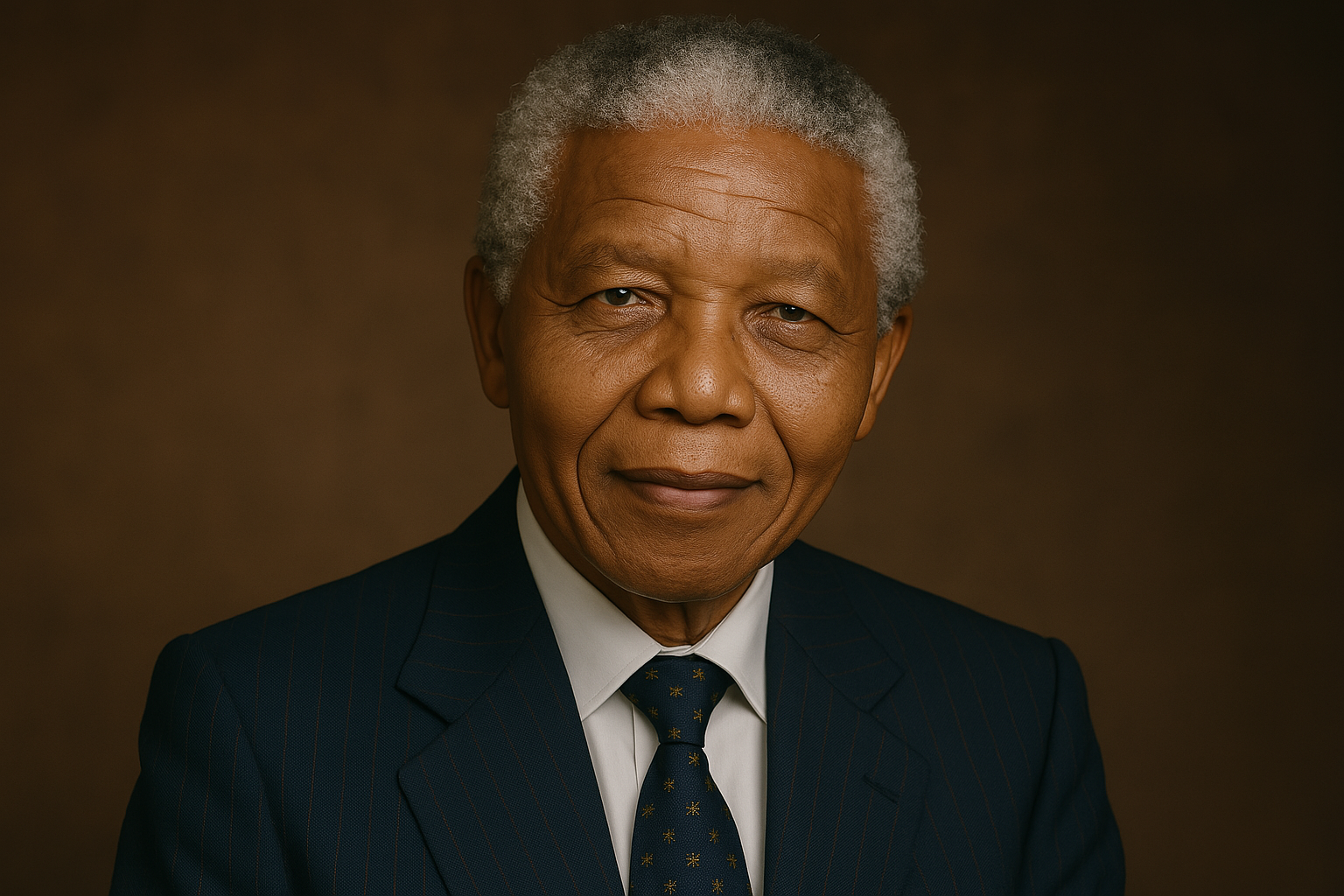
Nelson Mandela is an extremely influential personality in the struggle against South African apartheid, still inspiring leaders and executives today. He is also known as the country’s first democratically elected president and his personality is synonymous with reconciliation, resilience and transformation. He is known as an icon of justice and peace. He has also led South Africa through a huge transition from decades of racial oppression to an inclusive democracy. His ability to lead with dignity, humility, and compassion has established him as one of the most influential leaders of the 20th century.
His charisma was not only in his life story but it was also in his ethical principles. It was also in his ability to show empathy even in the face of adversity. He rejected revenge and bitterness as a leader even though he spent 27 years in prison and he advocated for forgiveness, negotiation, and unity. All these qualities combined made him a model for transformational leadership and inspired the global community alongside Africans.
The detail below is going to explore his charismatic traits as well as the positive aspects of his leadership, the critiques of his approach, and the lessons that all leaders can learn from his legacy.
2. Mandela’s Charismatic Traits
2.1 Moral Authority and Ethical Leadership
Mandela had an unmatched moral authority that came from his devotion to equality and justice. His life definitely represented the success of principle over personal self-interest, which gave credibility to his leadership. He remained steadfast in his belief in freedom for all people no matter what their race is, even in an extremely oppressive climate.
This clarity was also accompanied by ethical leadership because Mandela prioritised what he saw as the greater good. For example, during the time of his presidency, he adopted some policies that may not have been expedient for different sectors of the constituency but were extremely important for the unity of the nation. His ability to reconcile the oppositional groups, which included South Africa’s black majority and white minority, was completely grounded in a sense of integrity, which also earned him a lot of admiration both in his own country and internationally.
2.2 Empathy and Reconciliation
Empathy was one of the major traits of Mandela’s leadership. Despite the fact that he spent a long time in imprisonment under some really harsh conditions, he came out without any sort of bitterness and he chose to forgive and work with those people who had once contributed to apartheid. His empathy was what allowed him to connect with individuals deeply no matter what their walks of life were, including politicians, prisoners, and some former jailers.
The philosophy of Mandela’s leadership completely revolved around reconciliation. His decision to work with Frederick Willem De Klerk, who was the last president of the apartheid era in South Africa, was extremely important in creating a path for a peaceful transition. By prioritising negotiation and inclusivity, he avoided the possibility of any sort of division or violent reprisal which set the foundation for peaceful democracy.
2.3 Mastery of Symbolism
Mandela had an innate understanding of the power of symbolism in leadership. From donning the Springbok jersey at the 1995 Rugby World Cup which was a gesture that symbolised unity between South Africa’s racially divided communities to his conscious choice of inclusive rhetoric, Mandela used different symbols to inspire hope and also create solidarity.
He had an extremely calm yet determined demeanour which was often described as regal and it also amplified his charisma. Mandela projected an image of a leader who came and rose way above his personal grievances, embodying resilience, unity as well as moral courage. His capacity to inspire through these actions is definitely one of the most enduring traits.
2.4 Inspiring Vision and Optimism
The leadership of Mandela was infused with an optimistic vision for a great future. In the really difficult times, he insisted on the possibility of a United South Africa where freedom and justice would eventually prevail. Even when he was facing a lot of obstacles his speeches and his writings were completely filled with a lot of hope and encouragement.
One of his most common and famous sayings is that it always seems impossible until it is done. And this caught his ability to inspire persistence in everyone around him. For the leaders who are facing different challenges staying optimistic and committed to a long-term vision can definitely push all the communities through adversity.
3. Positive Aspects of Mandela’s Leadership
3.1 Transformational Leadership
Mandela’s leadership was definitely an example of the transformative power of vision persistence as well as forgiveness. He led South Africa completely out of the apartheid era and he achieved exceptional changes that so many people thought were impossible. His tenure as president marked a radical departure from exclusionary policies to one that believed in negotiation, democracy, and diversity.
The presidency of Mandela also showed hope for global struggles against racism, inequality, and injustice. His success in implementing policies that were reconciliation-oriented. It inspired all leaders worldwide to adopt approaches that were nonviolent in dealing with conflicts.
3.2 Building Unity in Diversity
South Africa was known as the rainbow nation. They owe so much of their national identity to Mandela’s inclusive approach to leadership. He recognised the divisions within the society. He prioritised unity and focused on shared humanity rather than differences. His work with the Truth and Reconciliation Commission and outreach to the populations that were marginalised showed his commitment to creating an extremely inclusive democracy.
His partnership with all the former adversaries showed his strong belief in dialogue over confrontation, which set a global example for the resolution of conflict. By paying attention to diversity as a strength instead of a liability he made a path for all the leaders who are seeking to harmonise divided societies.
3.3 Global Statesmanship
The primary focus of Mandela was on South Africa but his leadership definitely resonated globally. He used his platform to deal with wider issues like poverty, inequality aids which also extended his influence beyond national borders. His advocacy for human rights and equality also made him a global icon which earned him the Nobel Peace Prize in the year 1993.
He was known as a statesman and he advanced the idea that leadership goes beyond national interests. His grace and his commitment to collaboration earned him extreme respect in all the global forums and also positioned him as a symbol of everything that is possible when leaders work with vision and integrity.
3.4 Enduring Influence Through Symbolic Actions
His leadership left behind symbolic actions whose impact continues to resonate. For example, his ability to connect sports with reconciliation not only united South Africans but also showed how cultural elements can play a huge role in bridging divides. Through moments like this, he reinforced the importance of compassion, unity as well as collective identity.
Even after leaving office he remained active and he used different platforms like the Elders, which was an independent group of different global leaders working on human rights issues and peace to address different humanitarian challenges. His post-presidency showed alignment with his principles further cementing his legacy all around the globe.
4. Critique of Mandela’s Leadership
4.1 Delayed Economic Transformation
Mandela had remarkable achievements in political reconciliation but some critics still point out that his presidency was only addressing the economic inequalities in South Africa. While the transition from apartheid showed political freedom and universal suffrage, the structural economic systems that assisted a very small minority remained largely intact.
So many South Africans, especially in the marginalised and poor communities felt they were excluded from the economic progress which was experienced by all the wealthy sectors. Critics also argue that Mandela achieved historic milestones in building unity but he left an economic transformation agenda for the following administrations.
4.2 The Risks of Over-Reliance on Charisma
The leadership of Mandela was deeply tied to the personal charisma and moral authority which also presented different challenges in the sustainability of all the policies he made.
Many felt that South Africa’s successes during his tenure depended on his personal influence instead of strong institutions. This over-personalisation of leadership definitely raises a lot of questions about the durability of the charismatic leadership models in dealing with the long-term challenges in governance.
4.3 Decision-Making Pragmatism vs. Idealism
Mandela’s approach to governance often weighed ideals of reconciliation against political compromises. His approach was important for stability, but some critics also argue that compromises during the presidency of Mandela also resulted in insufficient accountability for all the crimes that were being committed under apartheid, fuelling perceptions of impunity among some specified groups.
For example, the Truth and Reconciliation Commission’s restorative rather than a punitive justice framework was seen as an incomplete process. This criticism also shows the different challenges leaders face in balancing ideals with real-world challenges specially when dealing with divided societies.
5. Lessons for Modern Leaders
5.1 Practising Forgiveness and Empathy
Forgiveness and empathy are definitely important characteristics if you want to have effective leadership. For professionals who are managing disputes, preferences or conflict, giving priority to resolution over retaliation can also create long-term peace and collaboration. Leaders who show empathy can also create trust and decrease disagreement within their organisations.
5.2 Leading with Vision and Optimism
Even in adversity the ability of Mandela to inspire optimism is an important lesson for all modern leaders. He gave a clear vision for the future specifically during periods of uncertainty work to energise different teams and populations. Leaders can easily maintain morale even when the circumstances are extremely difficult while also acknowledging all the present challenges.
5.3 Building Bridges Across Divides
Leaders must deal with growing diversity and societal divisions in an interconnected world. The example of Mandela uniting people through inclusivity and dialogue also gives a framework for all leaders who want to harmonise competing interests. Prioritising collaboration can also overcome divisions and create different opportunities for shared success.
5.4 The Importance of Symbolic Leadership
His mastery of symbolic gestures also reveals the impact of extremely powerful messaging. Leaders who pay attention to their own actions, their tone and attire can affect perceptions and also garner support from the world. Cultural and symbolic sensitivity in leadership is also an important factor in building trust among the stakeholders.
6. Conclusion
His leadership is definitely an example of the impact of resilience, empathy, and dignity in dealing with injustice. For social justice through his commitment to reconciliation, inclusive governance, and global advocacy he inspired domestic change in South Africa and also international movements.
His ability to balance optimism with realism also remains an important lesson for all leaders who want to get rid of divisions and manage diversity.
But at the same time, his legacy also works as a reminder of the systemic and structural challenges that only outstanding leadership cannot resolve. This shows the importance of long-term strategies and also the strength of institutions. His leadership represents the standard of ethical and charismatic leadership for leaders today. It is an example of how transformative change can also easily be achieved with purpose, confidence and compassion.
Transform your communication and presence with leadership advisory services.
FAQs
Why is Mandela known as a transformational leader?
He took South Africa out of decades of racial oppression into an inclusive, nonviolent democracy and that is why he is known as a transformational leader. He transformed the governance framework of the country through negotiation, diversity rather than relying on reprisal or exclusionary policies.
What was Mandela’s approach to working with former political adversaries?
Mandela prioritised dialogue and inclusivity over confrontation. A prime example was his strategic decision to work alongside F. W. de Klerk. They forged a peaceful transition to democracy and set a global standard for conflict resolution by choosing negotiation over violence.
How did Mandela use symbolic gestures to promote national unity?
Mandela understood that actions and imagery often speak louder than policy. His most iconic gesture occurred during the 1995 Rugby World Cup. This is where he wore the Springbok jersey which is traditionally associated with white South Africans to visually convey solidarity and bridge the country’s racial divide.