
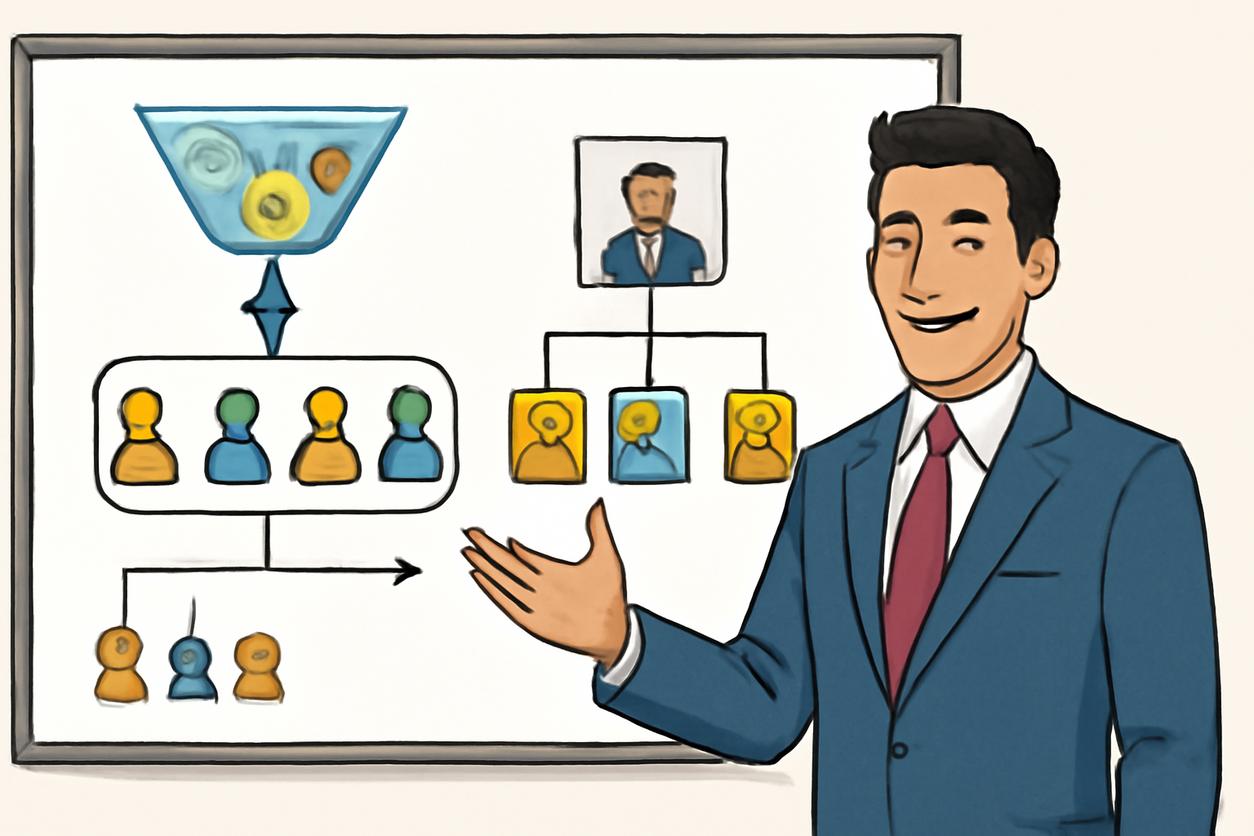
The Strategic Leader’s Guide to Succession Planning for 2025 and Beyond
Table of Contents
- Executive summary and outcomes
- Why proactive succession sustains organisational performance
- Identifying critical roles and strategic priorities
- Mapping competencies and career pathways
- Building internal pipelines through stretch assignments
- Succession readiness checklist and measurement
- Governance, timelines, and decision gates
- Scenario planning and transitional playbooks
- Action plan template with next steps
- Common pitfalls and how to avoid them
- Further reading and tools to adapt internally
Executive summary and outcomes
Effective Succession Planning is more than a risk mitigation strategy; it is the cornerstone of organisational resilience and sustained growth. In an era of rapid change, relying on reactive hiring for critical leadership positions is a gamble most businesses cannot afford. This guide moves beyond simple replacement charts to provide a comprehensive framework for identifying, developing, and retaining the next generation of leaders. For HR leaders, executives, and business owners, the goal is to transform succession planning from an annual administrative task into a dynamic, strategic process. By the end of this article, you will have the tools to audit critical roles, map future-focused competencies, build a robust internal talent pipeline, and measure the readiness of your future leaders, ensuring seamless transitions and uninterrupted business momentum.
Why proactive succession sustains organisational performance
A proactive approach to succession planning is a direct investment in your organisation’s future stability and competitive edge. When a key leader departs unexpectedly, the ripple effects can be profound, impacting everything from team morale to investor confidence. A well-executed succession strategy mitigates these disruptions, ensuring business continuity. Furthermore, it safeguards invaluable institutional knowledge that might otherwise walk out the door. When employees see clear pathways for advancement and investment in their development, their engagement and loyalty skyrocket. This commitment to internal growth not only reduces turnover costs but also creates a powerful employer brand that attracts top-tier external talent. Ultimately, organisations that master succession planning are more agile, better equipped to navigate market shifts, and consistently outperform competitors who are caught in a perpetual cycle of reactive hiring.
Identifying critical roles and strategic priorities
The foundation of any successful plan is a clear understanding of which roles are most crucial to the organisation’s strategic objectives. This process must extend beyond the C-suite and senior management. A critical role is any position that, if vacant, would significantly disrupt operations, jeopardise strategic goals, or create a substantial knowledge gap. To begin, align your succession planning efforts with your long-term business strategy for 2025 and beyond. Are you expanding into new markets, launching a digital transformation, or focusing on operational excellence? The answers will highlight the roles and capabilities essential for future success.
How to audit role impact and risk
A systematic audit helps prioritise your efforts. Evaluate roles based on two primary dimensions: their impact on strategic execution and the risk associated with their vacancy. This risk includes factors like the scarcity of required skills in the market, the length of time needed for a new person to become fully proficient, and the concentration of unique knowledge in the incumbent.
Use a simple risk-impact matrix to categorise roles:
- High Impact, High Risk: These are your top priority for succession planning. They are vital to strategy and difficult to fill. Immediate and intensive development plans for potential successors are required.
- High Impact, Low Risk: These roles are critical, but the talent pool (internal or external) is more readily available. The focus should be on maintaining a healthy pipeline and ensuring smooth transitions.
- Low Impact, High Risk: These roles may be specialised but are less central to core strategy. Mitigation strategies could include cross-training, knowledge documentation, or consulting relationships.
- Low Impact, Low Risk: While still important, these roles require less intensive succession efforts. Standard talent management processes are often sufficient.
Mapping competencies and career pathways
Once critical roles are identified, the next step is to define what success looks like within them—not just today, but in the future. Legacy job descriptions are often insufficient. Instead, you need to map the core competencies required to excel. These competencies should be a blend of technical skills, leadership abilities, and behavioural attributes aligned with your company culture and future strategic direction. For a Chief Marketing Officer role in 2025, for instance, competencies might shift from traditional brand management to expertise in data analytics, AI-driven marketing, and digital customer experience.
Reproducible role mapping framework explained
This framework provides a structured way to define the success profile for any critical role. It ensures a consistent and objective approach across the organisation. For each identified role, document the following components in a simple table or document:
| Framework Component | Description | Example (for a future Head of Operations) |
|---|---|---|
| Strategic Imperatives | The key business outcomes the role is responsible for achieving in the next 3-5 years. | Drive 15% improvement in supply chain efficiency through automation; lead ESG compliance initiatives. |
| Core Competencies | The essential skills and knowledge required. Distinguish between “must-have” and “can-be-developed”. | Must-have: Lean Six Sigma, global logistics management. Can-be-developed: AI implementation for predictive maintenance. |
| Leadership Qualities | The behavioural attributes and emotional intelligence needed to lead effectively in your culture. | Resilience under pressure, ability to lead cross-functional teams, strong change management communication. |
| Critical Experiences | The “tours of duty” or key experiences that are crucial for developing judgment and perspective. | Managed a team through a major operational crisis; led an international facility launch; P&L responsibility over $50M. |
This “Success Profile” becomes the benchmark against which you can evaluate potential internal candidates and structure their development plans.
Building internal pipelines through stretch assignments
The most effective way to prepare high-potential employees for future leadership roles is through carefully curated experiences. Passive learning, like attending courses, has its place, but true development happens when individuals are challenged to step outside their comfort zones. Stretch assignments are deliberate opportunities that push candidates to build the competencies and experiences identified in your role mapping framework. These are not just about adding another task; they are about fostering growth.
Examples of powerful stretch assignments include:
- Leading a high-stakes project: Assign a candidate to lead a cross-functional initiative that is critical to a strategic goal.
- Job rotations: Place a potential successor in a different business unit or geography to broaden their organisational perspective.
- Turnaround assignments: Task them with improving the performance of an underachieving team or process.
- Mentoring junior staff: This develops leadership, coaching, and communication skills.
Coaching and assessment approaches
Development must be supported by robust feedback and coaching. Regular, structured assessments help both the organisation and the individual understand their readiness for the next level. Effective approaches include:
- 360-Degree Feedback: Provides a holistic view of a candidate’s performance by gathering input from their manager, peers, direct reports, and other stakeholders.
- Psychometric Assessments: Can offer objective insights into leadership style, cognitive abilities, and potential derailers. These should be used as a developmental tool, not a selection gate.
- Executive Coaching: A professional coach can help a high-potential employee navigate challenges, build self-awareness, and create a targeted action plan for their development. Find out more about developing leaders from within from the Society for Human Resource Management (SHRM).
Succession readiness checklist and measurement
To ensure your succession planning process is effective, you must track progress and measure readiness. This moves the process from a theoretical exercise to a data-informed strategy. A readiness checklist helps standardise the evaluation of candidates for a specific role.
Candidate Readiness Checklist:
- [ ] Consistently exceeds performance expectations in their current role.
- [ ] Demonstrates a high level of proficiency in the core competencies of the target role.
- [ ] Has completed the critical experiences identified in the Success Profile.
- [ ] Exhibits the required leadership qualities and cultural fit.
- [ ] Shows a strong desire and motivation to take on the target role.
- [ ] Has a designated mentor or coach and is actively engaged in their development plan.
Beyond individual checklists, key organisational metrics to track include:
- Bench Strength: For each critical role, how many “ready now,” “ready in 1-2 years,” and “ready in 3-5 years” candidates have you identified?
- Internal Fill Rate: What percentage of senior positions are filled by internal candidates?
- Succession Candidate Retention: What is the turnover rate among your high-potential pool?
Governance, timelines, and decision gates
A formal governance structure ensures that succession planning is a continuous and accountable process. It should not be solely an HR initiative. True success requires sponsorship and active participation from the highest levels of the organisation. Define clear roles and responsibilities.
- The Board of Directors: Responsible for CEO succession and for overseeing the entire executive succession planning framework.
- The CEO: Owns the succession process for the senior executive team and champions the culture of talent development throughout the organisation.
- The Executive Team: Responsible for identifying and developing talent within their respective functions.
- HR Leaders: Facilitate the process, provide tools and frameworks, and ensure consistency and fairness.
Establish a clear annual timeline with key decision gates. For example, a Q1 talent review to identify high-potentials, a Q2 meeting to finalise development plans, a Q3 progress check-in, and a Q4 formal review with the board. Understanding the board’s role is critical, as detailed by insights from Harvard Business Review on corporate governance.
Scenario planning and transitional playbooks
Even the best plans can be disrupted by unexpected events. What happens if a key executive resigns for a competitor, or a rising star decides to leave the workforce? Scenario planning helps you prepare for these possibilities. Brainstorm a few likely “what if” scenarios for your most critical roles and think through your response.
This leads to the creation of transitional playbooks. A playbook is a simple, pre-agreed action plan for the first 90 days following a key leader’s departure. It should not be overly complex. It should outline:
- Interim Leadership: Who will step in as the interim leader? What is their specific mandate?
- Key Stakeholder Communication: A communication plan for employees, customers, and investors to maintain confidence.
- Decision-Making Authority: Clarification of who is responsible for critical decisions during the transition period.
- Activation of the Succession Plan: The immediate steps to begin the formal process of evaluating internal candidates or initiating an external search.
Action plan template with next steps
To translate this guide into action, use the following template to create your initial succession planning roadmap.
| Action Item | Owner(s) | Timeline (e.g., Q1 2025) | Resources Needed | Success Metric |
|---|---|---|---|---|
| Secure executive sponsorship and form a governance committee. | CHRO, CEO | Month 1 | Executive meeting time. | Committee charter defined and approved. |
| Identify and prioritise the top 10 critical roles using the risk-impact matrix. | Executive Team, HR | Month 2 | Business strategy documents. | Finalised list of prioritised roles. |
| Develop detailed “Success Profiles” for the top 3 priority roles. | Hiring Managers, HR | Month 3 | Facilitated workshops. | Completed profiles. |
| Conduct a talent review to identify potential successors for priority roles. | Executive Team | Month 4 | Performance data, 360-feedback. | Initial list of high-potential candidates. |
| Create individual development plans for the top candidates. | Managers, HR | Month 5 | Coaching resources, project budgets. | Signed-off development plans. |
Common pitfalls and how to avoid them
Many succession planning initiatives fail to deliver on their promise. Being aware of common pitfalls is the first step toward avoiding them.
- Pitfall: Confusing Replacement Planning with Succession Planning. Replacement planning is reactive and focuses on simply filling a vacant box. Succession planning is a proactive, long-term strategy focused on developing talent for future needs.
Solution: Focus on competency-based development and building a pool of talent, not just naming one “heir apparent” for each role. - Pitfall: Bias in Candidate Selection. Managers often favour individuals who are like them, overlooking diverse talent with high potential.
Solution: Use objective data, structured Success Profiles, and diverse review panels to make talent decisions. - Pitfall: Lack of Transparency. When the process is shrouded in secrecy, it can create anxiety and lead to the departure of valuable employees who feel overlooked.
Solution: Be transparent about the process and the competencies you are developing. Communicate that the goal is to provide growth opportunities for many, not to anoint a chosen few. - Pitfall: Failing to Link the Plan to Business Strategy. A succession plan that is disconnected from where the business is heading will develop leaders for the company of yesterday, not tomorrow.
Solution: Start every succession planning cycle with a review of the strategic plan to ensure alignment.
Further reading and tools to adapt internally
Continuous learning is essential for mastering strategic talent management. The principles of succession planning are constantly evolving. To deepen your understanding and find adaptable tools for your organisation, explore these resources:
- McKinsey & Company on Talent Management: Offers in-depth research and data-driven insights on building leadership pipelines and managing talent for strategic advantage. Their publications often provide frameworks that can be adapted internally. Explore their articles on the People and Organizational Performance practice.
- The Conference Board on Human Capital: A non-profit research organisation that provides valuable reports, case studies, and benchmarks on CEO succession and human capital analytics. Their work is evidence-based and highly respected by senior executives.
By adopting a structured, strategic, and transparent approach, you can transform succession planning from a source of organisational anxiety into a powerful engine for long-term growth and resilience.