
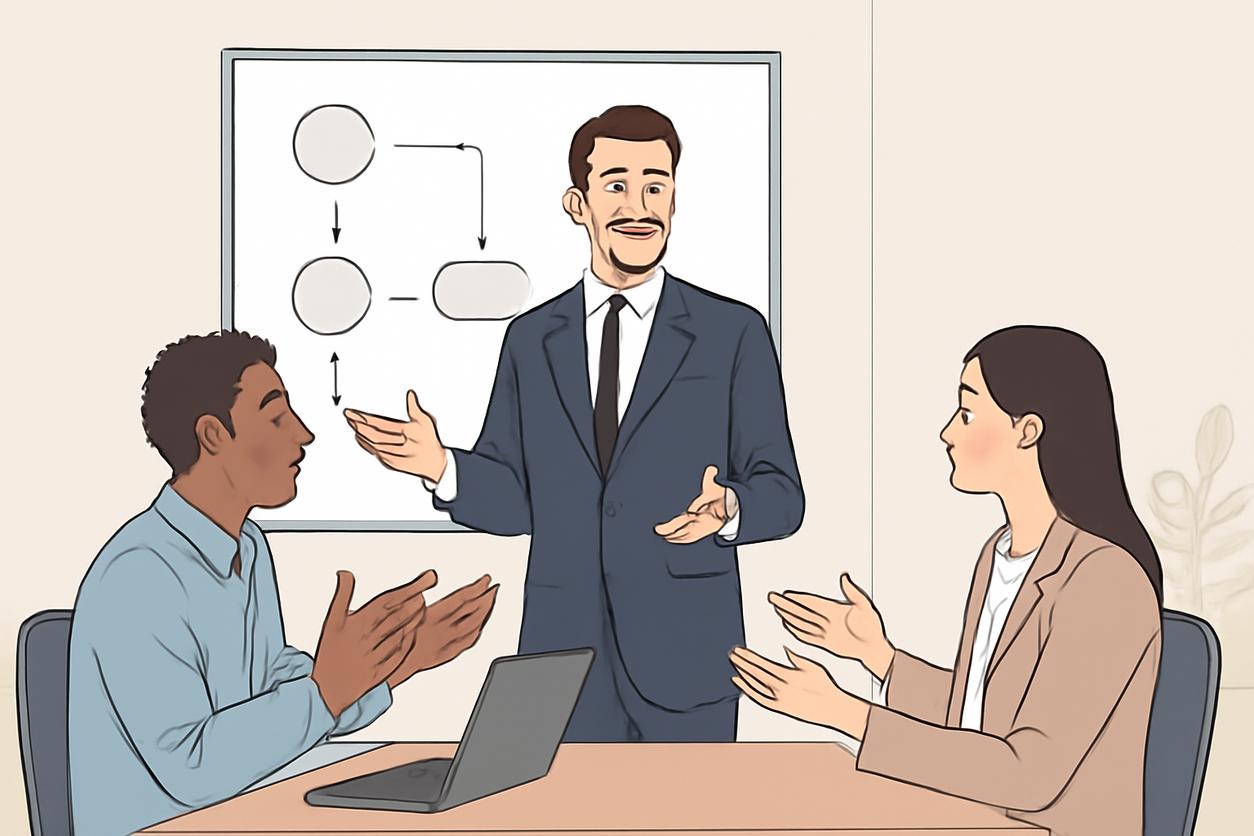
Introduction — The Case for Proactive Conflict Resolution
Workplace conflict is inevitable. Differing personalities, competing priorities, and high-pressure environments create a natural breeding ground for disagreements. Left unaddressed, these conflicts can erode morale, stifle productivity, and lead to valuable employees heading for the exit. However, when managed effectively, conflict can be a catalyst for growth, innovation, and stronger team cohesion. This is where mastering effective conflict resolution strategies becomes a non-negotiable leadership skill. In the dynamic workplace of 2025 and beyond, moving from a reactive to a proactive approach is paramount. This guide provides managers, HR professionals, and team leaders with a practical toolkit of proven conflict resolution strategies, complete with scripts, exercises, and metrics to build a more resilient and collaborative team.
Proactive conflict resolution isn’t about preventing all disagreements; it’s about building the skills and environment where they can be handled constructively. It means creating psychological safety, fostering open communication, and equipping your team with the tools to navigate friction before it escalates into a full-blown crisis. By investing in these capabilities, you transform potential disruptions into opportunities for deeper understanding and organizational improvement.
Types of Workplace Conflict and Common Triggers
Understanding the nature of a conflict is the first step toward resolving it. Most workplace disputes fall into one of three categories:
- Task Conflict: Disagreements over the goals, content, or execution of a task. This can be healthy in moderation, as it often sparks debate that leads to better solutions. For example, two developers might disagree on the best coding approach for a new feature.
- Relationship Conflict: Interpersonal incompatibilities that are often fueled by emotion, personality clashes, or perceived slights. This type is almost always destructive and needs swift intervention. An example is a team member feeling consistently ignored or disrespected by a colleague in meetings.
- Process Conflict: Disputes about how to get things done, such as disagreements over workflow, team roles, or resource allocation. For instance, the sales and marketing teams might clash over the lead handoff procedure.
Common triggers for these conflicts include poor communication, unclear expectations, limited resources, conflicting values, and organizational change. Identifying the root cause is crucial for applying the right conflict resolution strategies.
Personal versus Structural Conflicts: Quick Distinctions
It’s vital to distinguish whether a conflict is personal or structural. A personal conflict arises from interpersonal dynamics between individuals. A structural conflict, on the other hand, is caused by a flaw in the system, process, or organizational structure. For example, if two employees constantly argue over who should answer a specific type of client query, the issue might not be their relationship but the absence of a clearly defined responsibility matrix. Trying to mediate a personal issue when the root cause is structural will only provide a temporary fix. Addressing the structural flaw resolves the conflict for good.
Self-Reflection Checklist for Leaders Before Intervening
Before you step in to mediate, it’s critical to check your own perspective and readiness. Rushing in with biases or incomplete information can make the situation worse. Ask yourself these questions:
- What is my relationship with each individual? Am I perceived as neutral and fair by all parties involved?
- Do I have all the necessary information? Have I heard the preliminary concerns, or am I acting on rumors or a one-sided story?
- What are my own biases? Do I have a preconceived notion about who is “right” or “wrong”? How can I set that aside?
- Is my intervention required? Have the individuals attempted to resolve this themselves? Is it appropriate for me to step in, or should I coach them to handle it?
- What is the desired outcome? Am I aiming for a quick fix, a restored relationship, or a sustainable solution? My goal will shape my approach.
Taking a few moments for self-reflection ensures you enter the conversation as a calm, impartial, and effective facilitator, ready to deploy the right conflict resolution strategies.
A Five-Step Framework for Resolving Disputes
A structured approach provides a clear roadmap for navigating difficult conversations. This five-step framework helps de-escalate tension and guide parties toward a mutually acceptable solution. Effective conflict resolution strategies rely on a clear and repeatable process.
- Set the Stage: Create a neutral, private environment. State the purpose of the meeting is not to assign blame but to find a positive path forward. Establish ground rules, such as no interruptions and a commitment to respectful communication.
- Listen to All Perspectives: Allow each person to share their viewpoint without interruption. Use active listening to ensure they feel heard and understood. The goal here is information gathering and emotional validation, not debate.
- Identify Core Needs and Interests: Look beyond the stated positions to understand the underlying needs, fears, and goals of each party. Often, a shared interest is hidden beneath conflicting positions.
- Brainstorm Solutions Collaboratively: Encourage the parties involved to generate potential solutions together. The most durable agreements are those created by the people who have to live with them. List all ideas without judgment first, then evaluate them.
- Agree on a Path Forward: Select a solution that addresses the core needs of everyone involved. Clearly define the next steps, assign responsibilities, and set a specific time for a follow-up meeting to check on progress.
Step Templates for Opening, Probing, Negotiating, and Closing
Use these phrases to guide you through the five-step framework:
- Opening: “Thank you both for being here. My goal today is to help find a solution that works for everyone. To start, let’s agree to listen respectfully and focus on solving the issue, not blaming each other.”
- Probing (to identify needs): “Help me understand what’s most important to you in this situation.” or “When [the specific action] happened, what was the impact on you?”
- Negotiating (to brainstorm): “Let’s brainstorm some possible ways we could move forward. What’s one idea, no matter how small?” or “What common ground do we have here?”
- Closing: “It sounds like we’ve agreed on [summarize the solution]. To make sure we’re on the same page, [Person A] will do [specific action] by [date], and [Person B] will do [specific action] by [date]. Let’s plan to briefly check in next week to see how it’s going.”
Active Listening Techniques That De-escalate Tension
Often, individuals in conflict don’t feel heard. Active listening is one of the most powerful conflict resolution strategies because it validates feelings and clarifies information, which naturally de-escalates tension. Key techniques include:
- Paraphrasing: Restate what you heard in your own words to confirm understanding. “So, if I’m hearing you correctly, you felt frustrated because you were waiting for the report to finish your part of the project.”
- Summarizing: Periodically recap the key points of the conversation to show you are tracking the main issues and to create a sense of progress.
- Asking Open-Ended Questions: Use questions that require more than a “yes” or “no” answer to encourage the speaker to elaborate. Instead of “Are you upset?” try “How did that situation make you feel?”
- Acknowledging Emotions: Validate feelings without necessarily agreeing with the person’s position. “I can see that this is very frustrating for you.”
Negotiation Tactics That Preserve Relationships
The goal of workplace negotiation is not to win, but to find a sustainable solution that preserves the working relationship. Adopt a collaborative, “win-win” mindset with these tactics:
- Focus on Interests, Not Positions: A position is what someone says they want (“I need that report by Friday!”). An interest is why they want it (“I need the data to prepare for a major client presentation on Monday.”). By uncovering the underlying interests, you open up more creative solutions.
- Separate the People from the Problem: Address the issue without attacking the individuals. Frame the conflict as a shared challenge that you need to solve together. Use “we” language, such as “How can we solve this?”
- Use Objective Criteria: When possible, base decisions on objective standards, such as industry best practices, company policy, or fair market data. This removes personal opinions and emotions from the equation. These are fundamental principles for fair conflict resolution strategies.
Mediation Scripts and Manager Conversation Templates
Having a script can give you confidence when stepping into a difficult conversation. Here is a template for a manager-led mediation session.
Manager’s Opening Statement:
“I’ve asked you both here today to discuss the challenges you’ve been having with [Project X/Workflow]. My role here is not to take sides or decide who is right, but to act as a neutral facilitator. I want to help you find a way to work together more effectively. I ask that we each commit to listening without interrupting and speaking respectfully to one another. Can we agree to that? Great. [Person A], would you be willing to start by sharing your perspective on the situation?”
Transitioning to Brainstorming:
“Thank you both for sharing your perspectives. It’s clear that you both are committed to the project’s success, but you have different ideas about the best way to get there. Now that we understand each other’s views better, let’s shift our focus. What are some potential solutions we could try to address these challenges going forward?”
For more in-depth guidance, you can review federal guidance on mediation techniques, which offers robust frameworks for formal dispute resolution.
Practical Role-Play Scenarios and Facilitation Guide
Practicing conflict resolution strategies in a low-stakes environment builds confidence and skill. Use these scenarios in a team meeting or leadership training session.
Scenario 1: The Missed Deadline.
Alex relies on Maria for data to complete a weekly report. For the past three weeks, Maria has provided the data hours after the agreed-upon time, forcing Alex to rush and work late. Alex is frustrated and feels disrespected. Maria is overwhelmed with a high-priority project from another department and feels Alex is being inflexible.
Scenario 2: The Communication Clash.
Sam prefers to communicate via detailed emails to have a written record. Jordan prefers quick, informal chats to resolve issues on the spot and finds Sam’s emails to be overly formal and time-consuming. Jordan has started ignoring Sam’s emails, leading to project delays.
Facilitation Guide:
- Divide participants into groups of three (two role-players, one observer/facilitator).
- Assign roles and give them 5 minutes to read their character’s perspective.
- Run the role-play for 10-15 minutes, encouraging the parties to use the five-step framework.
- The observer provides feedback: What went well? What active listening techniques were used? Where did they get stuck?
- Debrief as a larger group, discussing key takeaways.
Building these skills is an essential part of improving team dynamics. Further educational resources on team communication can provide additional exercises and theory.
Simple Metrics and Follow-Up Routines to Measure Progress
To ensure your conflict resolution strategies are effective, you need to track their impact. While you can’t measure harmony with a number, you can use a combination of qualitative and quantitative metrics.
| Metric Type | Example | How to Track |
|---|---|---|
| Qualitative | Improved Team Morale | Regular one-on-one check-ins; observing team interactions; informal feedback. |
| Qualitative | Resolution Durability | Follow-up meetings 1 week and 1 month after mediation to ensure the agreement is holding. |
| Quantitative | Reduction in Formal Complaints | Track the number of HR complaints or formal grievances filed over time. |
| Quantitative | Employee Engagement Scores | Monitor scores on pulse surveys or annual engagement surveys, particularly questions about teamwork and psychological safety. |
| Quantitative | Team Performance and Productivity | Measure key project milestones, deadlines met, and overall output. |
Short Examples and Anonymized Vignettes
Vignette 1: Task vs. Relationship Conflict
The marketing team was in a heated debate. Sarah wanted to launch a bold, edgy ad campaign, while David advocated for a more conservative, data-driven approach. Their manager, recognizing this as a healthy task conflict, facilitated a meeting where both presented their rationale. Instead of letting it devolve into a personal (relationship) conflict, she helped them find a middle ground: an A/B test of both campaigns in a small market. The conflict led to a better, data-informed decision.
Vignette 2: The Power of Uncovering Interests
Two department heads were in a standoff over the budget for new software. One wanted an expensive, all-in-one platform (the position). The other wanted to stick with cheaper, separate tools (the position). A mediator discovered their underlying interests: the first head needed better reporting integration to save her team’s time (the interest), while the second was under pressure to cut costs (the interest). The solution wasn’t one platform or the other; it was finding a middleware tool that integrated the existing cheap software, satisfying both interests at a fraction of the cost.
Conclusion and Recommended Next Actions for Teams
Effective conflict resolution strategies are not just a tool for crisis management; they are a cornerstone of exceptional leadership and healthy team culture. By understanding the types of conflict, reflecting before intervening, and using structured frameworks for communication and negotiation, you can transform disagreements from destructive forces into opportunities for growth. The ultimate goal is to build a team with the skills and psychological safety to handle conflict constructively on their own.
For leaders ready to take action in 2025, here are the next steps:
- Share this guide with your leadership team. Start a conversation about your organization’s current approach to conflict.
- Schedule a training session. Use the role-play scenarios in this article to practice these crucial skills in a safe environment.
- Commit to follow-up. Implement the simple metrics and check-in routines to ensure resolutions are sustainable.
Investing in robust conflict resolution strategies is an investment in your people, your productivity, and your organization’s long-term success. For those interested in the evidence behind these approaches, further reading on conflict resolution research offers deep insights into the psychology of dispute management.